

May 19, 2026
Choosing the Right Commercial Sheet Pans: Materials, Construction, and Performance That Matter
In fast-paced commercial kitchens, bakeries, and foodservice operations, commercial sheet pans are one of the most frequently used—and often overlooked—tools. From baking and roasting to prep, serving, and display, the right sheet pan can directly impact efficiency, food quality, and operational longevity.
At Chicago Metallic Bakeware, we’ve built a long-standing reputation for delivering high-quality commercial bakeware designed to meet the demands of professional environments. With a broad assortment of commercial sheet pans and a deep understanding of performance-driven design, our product range offers solutions tailored to a wide variety of applications.
In this guide, we break down the key factors that differentiate commercial sheet pans—helping you make more informed decisions for your operation.
A Broad Range of Commercial Sheet Pans
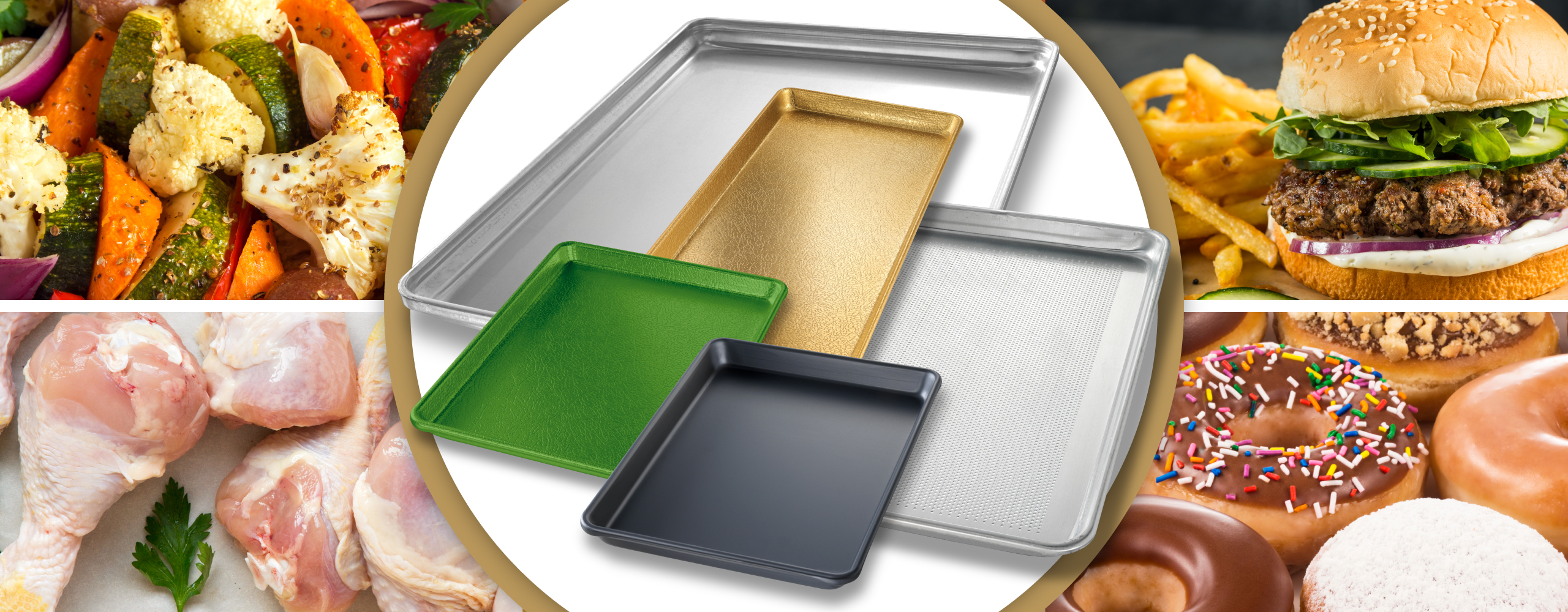
Not all commercial sheet pans are created equal. At Chicago Metallic Bakeware, we offer a comprehensive lineup designed to support diverse needs across bakeries, restaurants, and foodservice operations. Whether you’re producing high volumes of baked goods or managing a multi-functional kitchen, having the right sheet pan for the job improves both workflow and results.
Our breadth of options allows operators to standardize equipment across locations, optimize kitchen processes, and ensure consistency in finished products—an essential advantage in any professional setting.
Understanding Sheet Pan Materials
Material selection plays a critical role in the performance, durability, and maintenance of foodservice sheet pans. We offer several material options, each with distinct benefits:
Aluminum
A popular choice for bakery sheet pans, aluminum provides excellent heat conductivity for even baking and consistent results. It is lightweight, making it easy to handle in manual environments.
Stainless Steel
Known for its durability and corrosion resistance, stainless steel is ideal for applications where strength and sanitation are priorities. While it doesn’t conduct heat as efficiently as aluminum, it excels in longevity and resistance to harsh cleaning conditions.
Aluminized Steel
This material combines the strength of steel with the corrosion resistance of aluminum. It offers a balance of durability and heat performance, making it a versatile option for many foodservice applications.
Hardcoat Anodized Aluminum (BĀKALON)
Engineered for extreme durability, our BĀKALON material features a hardened aluminum oxide surface that resists scratching, corrosion, and wear. It does not chip, peel, or rust, and supports the use of metal utensils.
Pre-Seasoned Hardcoat Anodized Aluminum (BĀKALON)
Our pre-seasoned BĀKALON pans feature our proprietary AMERICOAT® ePlus glaze, baked into the surface to create a durable non-stick finish. This finish maintains its performance even after washing, helping reduce the need for oils and release agents.
Color Anodized Aluminum
Color anodized aluminum features a durable anodized surface with added coloration for enhanced visual appeal. While the anodization improves surface hardness and corrosion resistance, this material is not intended for baking applications and is best suited for foodservice display, merchandising, and front-of-house use.
Sheet Pan Sizes for Every Application
Commercial kitchens require flexibility, and sheet pan size plays a key role in maximizing efficiency. We offer a full range of sizes to support different equipment configurations and production needs:
- Full-size
- Three-quarter-size
- Half-size
- Half-long
- Third-size
- Quarter-size
- Eighth-size
This variety allows operators to match sheet pan sizes to ovens, proofers, prep stations, and display areas. Smaller sizes are ideal for portion control, prep work, or limited oven space, while larger pans support high-volume production.
Standardizing commercial sheet pan sizes across your operation can also streamline storage, improve workflow, and reduce handling time.
More Than Baking: A Multi-Purpose Tool
While commonly associated with baking, commercial sheet pans serve a much broader role in professional kitchens.
Cooking
Sheet pans are widely used for roasting proteins and vegetables, cooking appetizers, and preparing large batches of menu items.
Serving
In casual dining and fast-casual environments, sheet pans often double as serving trays, offering a sanitary, durable, and functional presentation option.
Display
For bakeries and foodservice counters, sheet pans can be used for product display—especially when paired with colored finishes or specialized coatings.
This versatility makes sheet pans an essential, multi-purpose tool that supports efficiency across multiple stages of food preparation and service.
Thawing
Thanks to the superior heat transfer of metal, frozen products thaw faster and more evenly on sheet pans than in plastic containers or tubs, helping improve kitchen prep efficiency.
Why Wire Rim Construction Matters
One of the most important—but often overlooked—features of a commercial sheet pan is its wire rim construction.
What Is the Wire Rim?
The rim of a sheet pan is reinforced with a metal wire that adds strength and rigidity to the pan’s perimeter. This reinforcement supports durability and performance in demanding foodservice environments.
Standard Option: Cold Rolled Steel
Many sheet pans use cold rolled steel wire in the rim. While this material is very strong and cost-effective, this material can be prone to rust over time—especially in high-moisture or high-wash environments.
Potential Risks
- Corrosion: Exposure to water and cleaning chemicals can lead to corrosion
- Food Safety Concerns: Rust and corrosion may introduce contaminants
- Reduced Lifespan: Structural integrity can weaken as corrosion progresses
Chicago Metallic Bakeware Alternatives
To address these challenges, we offer alternative wire options, including:
- Stainless steel wire: Provides superior corrosion resistance and longer lifespan
- Aluminum wire: Offers lightweight strength with improved resistance to rust
These options help extend the life of foodservice sheet pans while supporting food safety standards.
Importantly, many of our stock pans can be customized with alternative wire types—allowing operators to select the best configuration for their environment.
Additional Features That Enhance Performance
Beyond materials and construction, several design features can significantly impact how sheet pans perform in commercial settings.
NSF-Certified Options
Our NSF-certified pans meet strict public health and safety standards, making them suitable for use in regulated foodservice environments.
StayFlat® Design
Our StayFlat® sheet pans feature reinforced sidewalls with an engineered rib design. This construction increases sidewall strength and helps prevent bowing and warping, even under high temperatures and heavy use.
Plain vs. Glazed Pans
Operators can choose between plain pans or those coated with a glaze, depending on their application.
AMERICOAT® ePlus Silicone Glaze
Our non-PFAS formula silicone glaze provides enhanced release properties, reducing the need for additional oils or parchment while supporting easier cleaning and more consistent product release.
Colored Display Pans
For front-of-house or display applications, colored pans can enhance presentation while maintaining the durability required for commercial use.
Solid vs. Perforated Pans
- Solid pans: Ideal for general baking and roasting
- Perforated pans: Allow increased airflow, promoting even baking and improved crisping
Perforated foodservice sheet pans are especially beneficial for items such as chicken tenders, fries, and other products where a crisp finish is essential.
Making the Right Choice for Your Operation
Selecting the right commercial sheet pans involves more than choosing a size or material. Details such as wire rim construction, coating options, and pan design all contribute to overall performance, food safety, and longevity.
By understanding these differences, bakeries, restaurants, and foodservice operators can make more informed decisions—leading to better results, reduced replacement costs, and more efficient kitchen operations.
Our extensive range of sheet pans and foodservice sheet pans is designed with these considerations in mind, offering solutions that align with the real-world demands of professional kitchens.
When sheet pans are used every day across nearly every application, the details matter.
RELATED BLOGS
September 17, 2026
Why Quality Commercial Bakeware Is Worth the Investment
For commercial bakeries, restaurants, and foodservice operations, bakeware is something your team relies on every day. And while a pan Read More
July 21, 2026

Dunstone Joins Chicago Metallic Bakeware
Mike Macdonald, Vice President of Sales of Chicago Metallic Bakeware, has announced that Rob Dunstone has joined the company as Read More